A federal funding bill could give Missouri's intoxicating hemp beverage sellers a reprieve they weren't counting on a month ago. The U.S. Senate approved a short-term spending measure early Saturday, Aug. 9, that would fund federal agencies through Dec. 11 and, crucially, push back the federal ban on intoxicating hemp THC products to that same date. The bill now heads to the U.S. House, and if it clears that chamber and reaches the president's desk, Missouri's own Nov. 12 ban on intoxicating hemp products would partially soften - at least for beverages.
That's because of a carve-out written into the state law Gov. Mike Kehoe signed this spring. Missouri's ban was built to mirror the federal prohibition Congress passed last year, but lawmakers added a condition: if Congress delays its own ban, everything except intoxicating hemp beverages still goes off Missouri shelves as scheduled. Edibles, tinctures, vapes, and other hemp-derived THC products face the Nov. 12 cutoff regardless of what happens in Washington. For operators trying to plan wholesale menus and inventory around a moving regulatory target, the distinction matters enormously - and it's the kind of compliance puzzle that would benefit from the same operational discipline dispensary operators elsewhere have had to build into their point-of-sale and inventory systems, the sort of infrastructure you'd find behind cannabis POS for Northern Mariana Islands dispensaries, where regulated retail also means constant adjustment to shifting rules. cannabis POS for Northern Mariana Islands dispensaries
Jay Patel, president of the Missouri Hemp Trade Association, called the Senate's 61-31 vote a "good sign," noting there's bipartisan appetite in Congress and even some interest from the White House in passing more durable federal regulation. But he was careful not to oversell it. "Whatever happens on the federal side, it's not going to fully solve our problems in Missouri," Patel said. That's a fair assessment. A four-month federal delay buys time; it doesn't settle the underlying legal fight over how Missouri defines hemp versus marijuana, or resolve the compliance uncertainty operators are now navigating on a product-by-product basis.
A Lawsuit Still Looms Over the State Ban
The hemp trade association and a coalition of businesses filed suit last month in the U.S. District Court for the Western District of Missouri, arguing the state's ban rests on "unconstitutionally vague" definitions separating hemp from marijuana. That litigation runs on its own timeline, independent of whatever Congress does with the funding bill. Even if beverages get a federal and state reprieve through December, the lawsuit's outcome could reshape - or unravel - the entire framework retailers are currently trying to comply with. Operators would do well to keep close tabs on both tracks rather than assume one resolves the other.
Retailers Split Between Relief and Loss
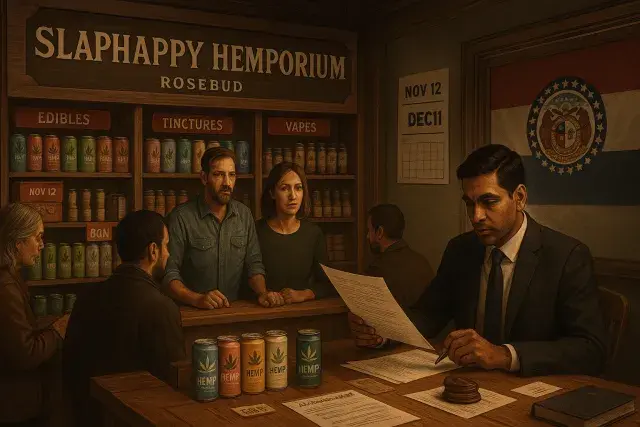
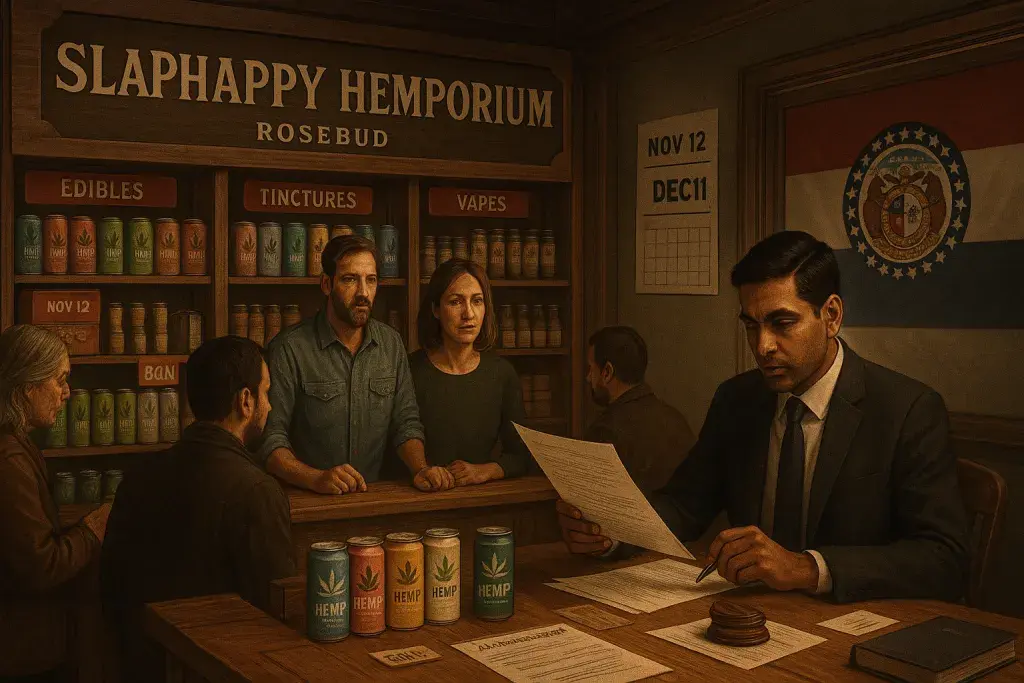
For businesses built around hemp-derived THC seltzers and other beverages, the delay is meaningful. John Grady, who owns Slaphappy Hemporium with his wife Kara in Rosebud, Missouri, said the Senate vote suggests a strong chance they'll keep selling THC seltzers through December. But beverages are only part of most hemp retailers' SKU mix. "We started off as a beverage producer," Grady said, "so for us, that is a good thing, but it also hurts the whole other part of our business." Edibles and other formats still face the Nov. 12 cutoff no matter what Congress decides, and Grady said customers are already stocking up on items set to disappear from shelves.
What Operators Should Watch Between Now and December
The next few months amount to a compliance stress test. Retailers carrying mixed hemp product lines need to separate beverage SKUs from everything else in their inventory systems now, not in November, since the two categories face entirely different fates under Missouri law. Wholesalers and brands supplying Missouri accounts should assume the Dec. 11 deadline is real but not guaranteed to bring permanent clarity - Congress could extend again, let the ban take effect, or pass substantive hemp regulation that changes the compliance picture entirely. Either way, the smart move for operators is treating this as a temporary bridge, not a resolution, and keeping documentation, lab testing records, and COAs current in case enforcement priorities shift quickly once a final deadline actually arrives.