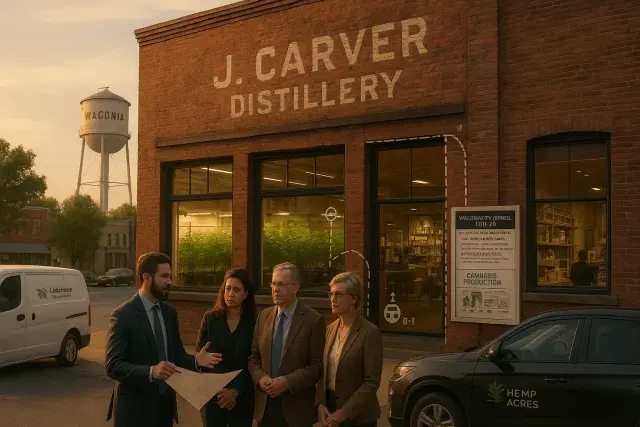
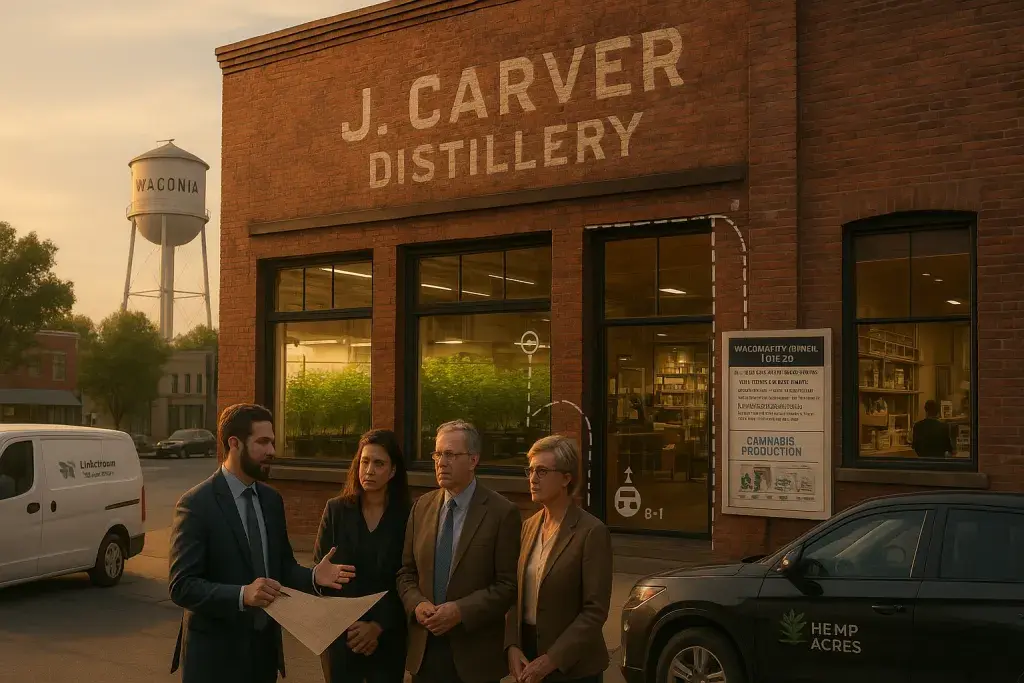
A local hemp and cannabis entrepreneur in Waconia, Minnesota, is pressing the city to amend its zoning ordinance so he can convert a shuttered distillery into a vertically integrated cannabis business - cultivation, processing, and retail under one roof. The Waconia City Council tabled the request at its June 15 meeting, with a decision expected at the July 20 session. The outcome will test how a small municipality balances buffer-zone compliance, license caps, and the economic appeal of repurposing a vacant commercial property.
Charles Levine, who already operates Hemp Acres - a hemp processing facility in Waconia's industrial park - and Laketown Farms LLC, a cannabis cultivation and processing operation on family land just outside the city, wants to relocate and expand into the J. Carver Distillery building. J. Carver's owners announced this spring that the distillery will cease operations this fall and the property is for sale. Levine holds what was reportedly the first cannabis microbusiness permit approved in the county, giving him a regulatory foothold that most prospective operators in the region don't yet have. For operators building similar vertical structures elsewhere, resources like this overview of regulated cannabis retail markets can help - learn more - about what compliance expectations look like as states and localities continue to refine their frameworks.
The proposal is essentially a seed-to-sale retail model applied to a brick-and-mortar main street setting: grow, manufacture, and sell on-site, with a possible educational component showing consumers how cannabis products are made. Levine drew a direct comparison to how J. Carver operated - producing spirits and selling them from the same location. That analogy carries genuine regulatory logic. Several states have modeled adult-use cannabis retail licensing on alcohol production permits, allowing vertically integrated operators to control their own supply chain, set wholesale-to-retail margins internally, and reduce dependency on third-party distributors. For a microbusiness operator, that kind of vertical integration isn't just a business preference; it's often the economic model that makes the license viable at all.
Where the Zoning Math Gets Complicated
Here's the catch. Waconia's current ordinance imposes a 1,000-foot buffer zone between any retail cannabis business and both schools and parks. The J. Carver site doesn't clear that threshold. The planning commission denied the buffer amendment outright. The city council expressed genuine interest in Levine's proposal - members specifically noted the locally owned, locally grown nature of the operation and the value of putting the distillery building back to productive use - but stopped short of approving anything, citing the need to fully assess the implications of reducing setbacks.
Buffer requirements are among the most politically sensitive elements of local cannabis zoning. They exist primarily to limit minor access to retail cannabis environments, a concern that sits at the center of most municipal cannabis ordinances across adult-use states. Reducing a 1,000-foot setback isn't administratively trivial. It typically requires a formal ordinance amendment, public comment periods, and - in communities near schools - heightened scrutiny from residents and elected officials alike. Even when a council is sympathetic to an operator's business case, the procedural and political weight of rolling back a buffer provision tends to slow things down. That's exactly what happened here.
The Two-Amendment Problem
Levine's request actually requires two separate ordinance changes. First, cannabis businesses would need to be permitted as an interim use in the B-1 highway business district - the zoning classification that covers the J. Carver site. Second, the buffer setback reduction. Either one alone would be a meaningful policy shift for a small city. Together, they represent a fairly significant rewrite of how Waconia currently thinks about where cannabis retail can operate.
Waconia is currently authorized to license two retail cannabis businesses under state population-based license allocation rules - a common structure in Minnesota's adult-use framework, where the number of retail licenses a municipality can issue is tied directly to its population. With only two retail slots available, the location of each one carries outsized weight. An operator who secures one of those licenses in a high-visibility, high-traffic commercial corridor - which the former distillery building may well be - has a meaningful market position. That's part of what makes this request worth watching. It isn't just a local zoning footnote; it reflects a broader tension between municipal buffer ordinances designed for cautious rollout and licensed operators who need commercially viable real estate to make their business work.
What the July Decision Will Signal
If the Waconia City Council approves the amendments at its July 20 meeting, it will give Levine a path to operate what would be an unusual retail configuration for a city of this size: a licensed cannabis microbusiness with full vertical integration, on-site processing, and direct-to-consumer retail in a repurposed commercial building with built-in community recognition. That's a real asset. Consumer familiarity with a location - especially one with an existing association with craft production - can reduce the marketing lift a new cannabis retailer typically faces in a regulated market.
If the council declines, or if the buffer amendment fails to advance, Levine's expansion plans stall, and the J. Carver building continues its search for a buyer under conventional commercial terms. Either way, the outcome will offer a data point for other small municipalities still calibrating their cannabis zoning ordinances: how much flexibility are local governments willing to build into their frameworks when the operator is established, locally rooted, and already licensed - and when the alternative is a vacant property on a key commercial corridor?
The council reconvenes July 20. That's when the answer becomes official.