
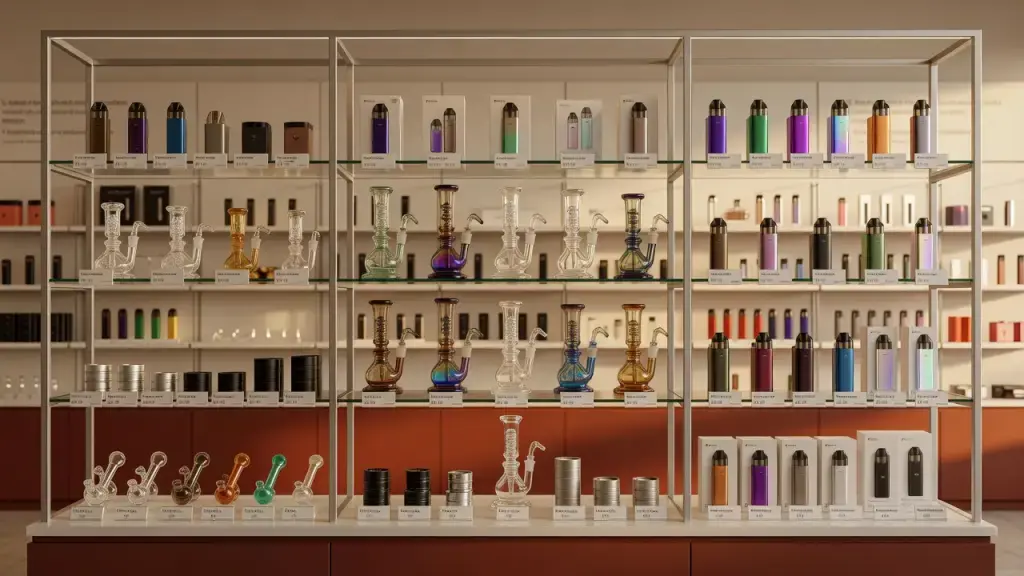
A customer who balks at a $25 grinder will turn around and drop several hundred dollars on a dab rig without blinking. That is not inconsistency. It is a pricing signal dispensary operators keep missing. Internal sales data circulating among retail consultants in 2026 shows the split holding steady: value-priced basics move reliably, premium electronics move selectively, and glass - oddly enough - is quietly delivering some of the strongest margins in the accessory case.
Glass Works Because It Serves Two Different Jobs
Glass is where this behavior shows up most clearly, and it's worth understanding why. A functional hand pipe can retail for around $5 and still carry a healthy margin if sourced correctly. A daily-use water pipe might run $25 to $50. Above that, enthusiasts pay for craftsmanship, design, or collectability - though the true heady pieces usually get bought straight from a glassblower, not off a dispensary shelf. That range matters for retail planning. It means a single category can serve the customer who just wants something that works and the customer who wants something worth showing off, without requiring two different store strategies. Grinders follow a similar logic: new features arrive constantly, but a basic grinder at the right price point still sells because the job hasn't changed.
Premium Electronics Need a Reason, Not Just a Price Tag
Here's the catch with higher-end concentrate devices: putting an expensive unit on the shelf does not manufacture demand for it. These products last for years, so replacement cycles are slow, and a shopper who already owns a working device has little incentive to buy another one at full wholesale markup. Brand loyalty and limited releases can override that math - Puffco's colorway drops are a case in point - but that demand is narrow and specific. If the release sells out, the customer often won't settle for the similarly priced unit sitting next to it. Retailers who read one hot SKU as proof that customers want premium devices across the board risk tying up cash in slow-moving inventory, which is its own kind of compliance headache once 280E tax exposure and carrying costs get factored in.
Spending Patterns Don't Track Income the Way Buyers Assume
Budget tiers are a poor predictor of what a given shopper will pay for. A concentrate enthusiast with modest disposable income may own several expensive rigs because that's the part of the experience they prioritize, while buying the cheapest rolling papers on the shelf. It's the same instinct that has someone wearing a luxury watch with a plain T-shirt. For a dispensary, the practical takeaway is to stop labeling customers "premium" or "budget" and start tracking which categories they're actually willing to pay up for - sales history and counter conversations will tell that story better than any demographic assumption.
Building an Assortment Without Overbuilding the Shelf
Accessories still account for a small slice of dispensary revenue at many stores, which leaves real room to grow basket size and gross profit without adding SKU bloat. A starting assortment of roughly 40 to 50 products, chosen around how that store's customers actually consume, tends to outperform a wall of glass and a thousand options nobody asked for. Execution matters as much as selection: clear pricing, visible placement, trained staff who can explain the difference between options, and regular review of sales velocity and inventory turnover. The goal isn't stocking everything - it's making sure a $5 pipe and a $300 device can both earn their shelf space, because the customer already knows which one they're willing to splurge on. The retailer's job is simply not to get in the way of that choice.