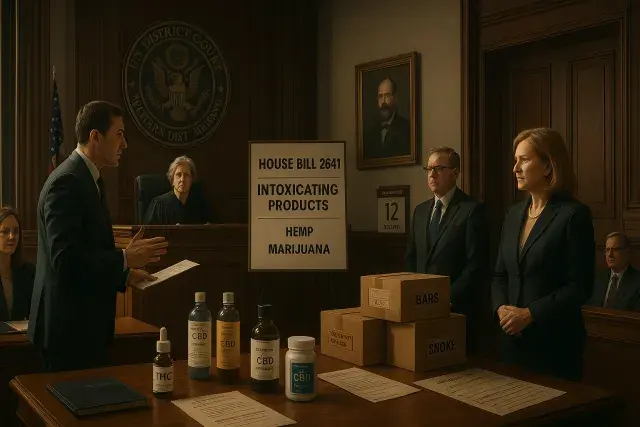
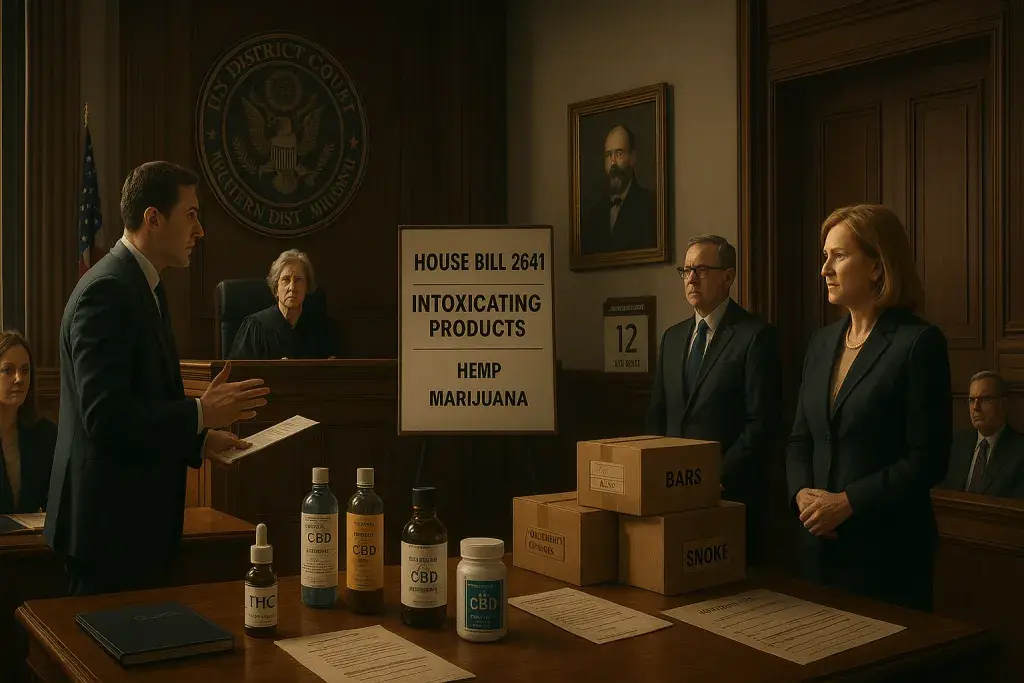
A coalition of hemp businesses filed a federal lawsuit Thursday in U.S. District Court for the Western District of Missouri, seeking to halt a statewide ban on intoxicating hemp products before it takes effect November 12. The legislation, House Bill 2641, was among the first bills Gov. Mike Kehoe signed this year and would pull THC seltzers, intoxicating CBD products, and similar hemp-derived items from bars, grocery stores, and smoke shops statewide. The plaintiffs - including St. Louis-based MNG 2005, Inc., parent company of the 55-store CBD Kratom chain, the Missouri Hemp Trade Association, and Wisconsin-based Lifted Liquids Inc. - argue the law is constitutionally unworkable as written.
The core legal argument is one compliance professionals will recognize immediately: the statute allegedly defines the same products as both "hemp" and "marijuana" in different provisions, creating direct conflicts within the text itself. That ambiguity isn't just a regulatory inconvenience - because unlicensed marijuana activity carries criminal penalties in Missouri, the definitional confusion has real legal exposure for retailers and distributors trying to determine what they can lawfully sell, ship, or stock. For operators in states where hemp and cannabis regulatory frameworks sit in uncomfortable proximity, this is worth paying attention to; you can read more about how licensed cannabis markets handle overlapping product categories and compliance frameworks in states like Colorado, where the distinction between hemp-derived and marijuana-derived products carries similarly high stakes for retailers.
Craig Katz, government relations and compliance manager for MNG, put the drafting problem plainly: "When people are trying to legislate it, if they don't understand it, you come up with something like HB2641, which doesn't make a whole heck of a lot of sense." That's not a throwaway line. Legislative ambiguity at the definitional level creates downstream compliance chaos - for point-of-sale inventory management, for wholesale purchasing decisions, and for the distributors who move product across state lines. The coalition's lawsuit also flags that the bill restricts who may transport hemp products through Missouri, which implicates interstate commerce protections, and contains effective-date provisions that the plaintiffs describe as too convoluted for businesses to determine which products are covered or when.
What the Law Actually Does - and Who It Hits
HB2641 largely mirrors the federal hemp ban Congress approved last year, which will restrict intoxicating hemp-derived products at the national level. Missouri's version goes a step further, however: if Congress reverses course and permits these products federally, Missouri would only allow them inside licensed marijuana dispensaries. Even if Congress delays the federal ban, Missouri's law keeps a near-total prohibition in place - with a narrow carve-out for intoxicating beverages. That's a significant market restructuring, not just a regulatory adjustment.
Right now, without a regulatory framework governing intoxicating hemp products, items with THC content as high as 1,000 mg are being sold in Missouri smoke shops - outside the licensed marijuana dispensary system entirely. The bill's sponsor, Rep. Dave Hinman (R-O'Fallon), frames the legislation as giving state law enforcement and prosecutors the authority to enforce the federal ban once it kicks in. He's skeptical the lawsuit changes anything: "I believe this is the last ditch effort for the hemp industry," Hinman said. For licensed dispensary operators, the subtext here is worth noting - if the ban holds, the state's licensed marijuana retailers could see meaningful demand migration from hemp product consumers who have no other compliant retail channel.
The Compliance Cliff Businesses Are Facing
The coalition's concern about non-intoxicating CBD products being swept up in the ban is where this gets complicated for mainstream retail. If the statute's vague definitions inadvertently cover standard CBD products - oils, topicals, ingestibles that have no meaningful intoxicating effect - the business impact extends well beyond the THC seltzer market. Retailers outside the licensed cannabis system who carry compliant CBD SKUs would face genuine uncertainty about whether their inventory is legal to sell after November 12. That's not a theoretical risk; it's an operational one that purchasing managers and compliance officers need to assess now, before the deadline.
Missouri Attorney General Catherine Hanaway is the named enforcement authority under the bill. Her office had not been served the lawsuit as of Thursday. Kehoe's office and the Missouri Department of Health and Senior Services - which oversees the state's marijuana program and is also named as a defendant - both declined to comment given the pending litigation. That silence is standard, but it also means there's no official interpretive guidance on the statute's scope yet. For businesses trying to make inventory and compliance decisions ahead of November 12, that's a real problem. Jay Patel, president of the Missouri Hemp Trade Association, framed it directly: "This isn't consumer protection. It's the elimination of an entire legal industry coupled with a government-mandated monopoly." Whether or not the court agrees, the underlying tension - between an emerging hemp retail sector and a licensed cannabis system - is one that regulators and operators across multiple states are watching closely.