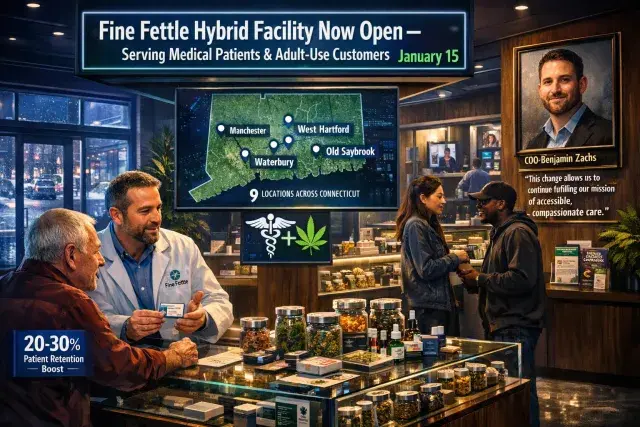
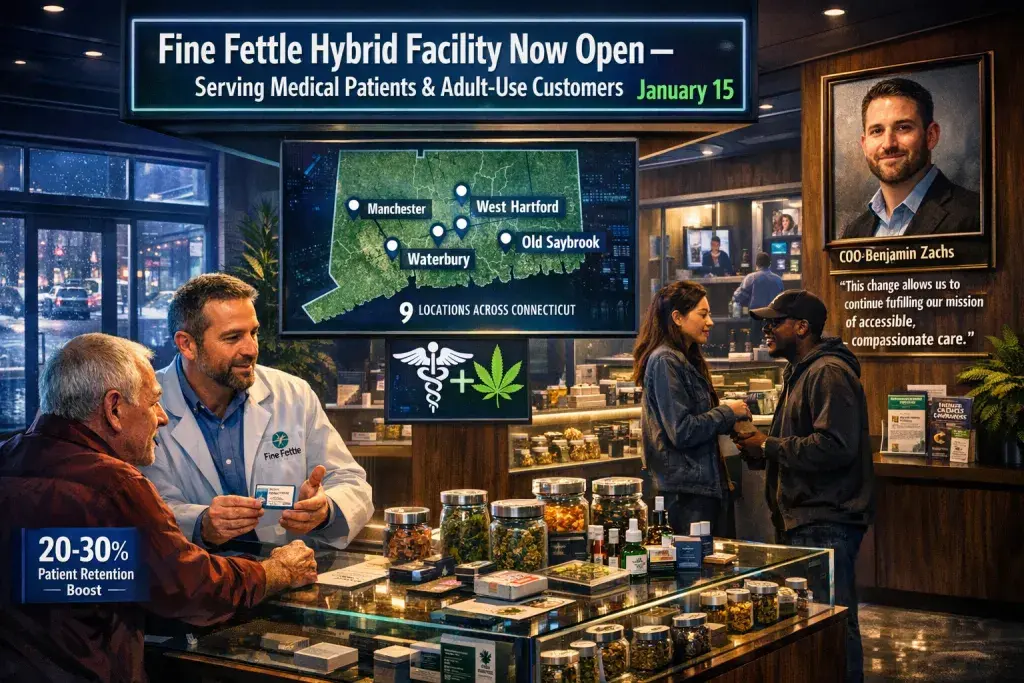
All nine Fine Fettle dispensaries across Connecticut will transition to hybrid facilities on January 15, enabling them to serve both medical marijuana patients and adult-use customers. This shift, driven by recent state regulatory updates, promises enhanced access to compassionate care while bolstering the state's evolving cannabis market.
Streamlining Operations Across Key Locations
Fine Fettle's expansion encompasses dispensaries in Manchester, Norwalk, Old Saybrook, Waterbury, and West Hartford, creating a unified hybrid network statewide. Each site will maintain remote and in-person consultations with licensed pharmacists, a vital feature of Connecticut's medical cannabis program that ensures personalized guidance on dosing, strains, and therapeutic uses.
- Hybrid model serves registered medical patients alongside recreational buyers
- Preserves expert pharmacist consultations for tailored patient care
- Addresses regional gaps where medical options have been scarce
Regulatory Changes Fueling the Shift
Connecticut's recent legislative and regulatory reforms allow recreational retailers to integrate medical services, reflecting a broader push toward operational efficiency in maturing cannabis markets. These updates respond to growing demand for integrated access, reducing silos between medical and adult-use sectors. Fine Fettle Chief Operating Officer Benjamin Zachs emphasized, "This change allows us to continue fulfilling our mission of accessible, compassionate care while strengthening the state's medical program."
Similar hybrid conversions nationwide have improved patient retention by 20-30% in states like Colorado and Illinois, where blended operations cut costs and expand reach without compromising safety standards.
Implications for Equity, Health, and Market Growth
By eliminating the need for medical patients to travel long distances, this model promotes health equity and convenience, aligning with public health trends prioritizing affordable, regulated cannabis as an alternative to opioids or unregulated sources. Zachs noted, "Patients shouldn't have to travel far for care or be stuck with limited options," highlighting efficiency gains that could lower barriers for underserved communities.
Looking ahead, Fine Fettle's move positions Connecticut as a leader in inclusive cannabis policy, fostering education, affordability, and community trust. As the state navigates its mature market phase, such integrations could enhance overall program sustainability, with hybrid facilities potentially increasing medical enrollment by streamlining access and expertise.