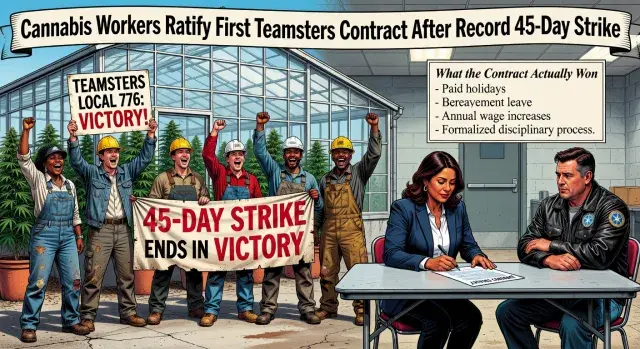
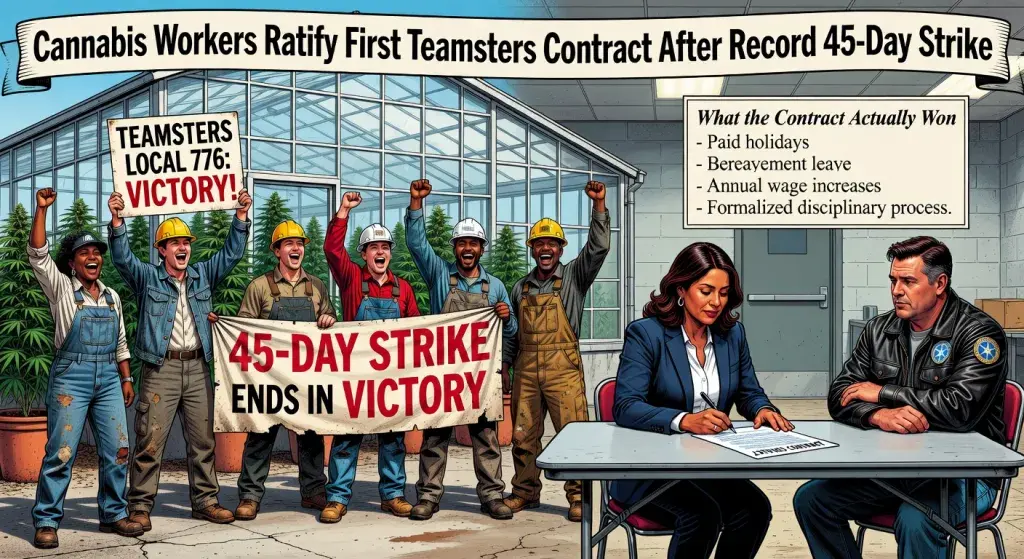
Workers at RISE, a subsidiary of multistate cannabis operator Green Thumb Industries, have secured their first collective bargaining agreement with the Teamsters - but only after walking picket lines for 45 days. That makes it the longest successful work stoppage in the history of the U.S. cannabis industry, a sector barely a decade old and already grappling with the labor pains of rapid, uneven growth.
What the Contract Actually Won
The ratified agreement covers members of Teamsters Local 776, which represents thousands of workers across Pennsylvania, Maryland, and West Virginia. The contract includes paid holidays, bereavement leave, annual wage increases, and - perhaps most consequentially - a formalized disciplinary process. That last item matters more than it might sound. In an industry where employment protections remain thin and turnover runs high, the right to contest a firing through a structured grievance procedure is not a perk. It's infrastructure.
"This is a monumental achievement, and it's entirely due to the grit and bravery of our members," Teamsters Local 776 President Ed Thompson said. The strike, he added, has "set the stage for thousands of other cannabis workers to join our cause."
The 45-day walkout broke a record previously held by - and here's where it gets interesting - another group of GTI Teamsters, this time in Illinois, who struck roughly two years ago. Green Thumb Industries, in other words, has become a recurring site of organized labor friction in cannabis.
Why Cannabis Labor Organizing Keeps Stalling - and Why This Didn't
Unionization in the cannabis industry faces structural headwinds that most other sectors don't. Federal illegality complicates everything: labor law enforcement is inconsistent, banking restrictions squeeze employers, and the workforce skews young and transient. Many state-legal cannabis operations launched as startups with flat hierarchies and informal cultures - conditions that can feel egalitarian right up until they aren't.
As multistate operators like GTI have consolidated and scaled, the gap between corporate structure and worker protections has widened. Dispensary and processing employees increasingly find themselves in retail or light-manufacturing roles - stocking shelves, advising patients, handling inventory - without the wage floors, benefits, or procedural safeguards that comparable positions in other industries take for granted.
The Teamsters have been quietly building a cannabis organizing strategy for several years now, targeting large multistate operators where the volume of workers and the corporate chain of command make traditional union tactics viable. Jesse Case, director of the Teamsters Food Processing Division, framed the RISE contract as a proof of concept: "By raising the bar at multistate operators nationwide, our union benefits workers, consumers, and proprietors in cannabis."
That's an ambitious claim. But the fact that RISE workers held a 45-day strike and won - in an industry where employers can often simply replace workers or wait them out - does suggest something has shifted in the balance of power. Community and customer support played a role. John Stambaugh, a patient care specialist at RISE, described "an outpouring of support" from the surrounding community and fellow union members.
The Broader Signal
One contract at one subsidiary does not remake an industry. Let's be clear about that. But the symbolism here carries real weight. Cannabis remains caught between two identities - countercultural product and corporatized commodity - and labor relations sit right at that fault line. Workers in dispensaries and grow facilities are often the public face of legalization, yet their compensation and working conditions rarely reflect the billions flowing through the sector.
The RISE contract is small in absolute terms. Its downstream effects could be larger. If the Teamsters can replicate this model at other GTI locations, and then at other multistate operators, it begins to establish a floor - baseline expectations around pay, leave, and due process that don't currently exist in any standardized way across the industry.
For now, the 45-day record stands. Whether it gets broken again - and by whom - will say a lot about where cannabis labor is actually headed.